
The annual inflation rate for May also showed an 11.54 per cent increase compared to the 22.41 per cent recorded in May 2023.
Nigeria’s annual inflation rate increased for the fourth consecutive month to 33.95 per cent as residents of Africa’s most populous country grapple with a cost of living crisis.
According to the National Bureau of Statistics (NBS), the May figure is 0.26 per cent higher than the 33.69 per cent recorded in April. The lowest figure in 2024 was 29.90 per cent, recorded in January.
The annual inflation rate for May also showed an 11.54 percentage point increase compared to the 22.41 per cent recorded in May 2023. “This shows that the headline inflation rate (year-on-year basis) increased in the month of May 2024 when compared to the same month in the preceding year (i.e., May 2023),” the NBS said.
The bureau also said that the rate of increase in the average price level in May was 2.14 per cent, 0.15 percentage points lower than the 2.29 per cent recorded in April.
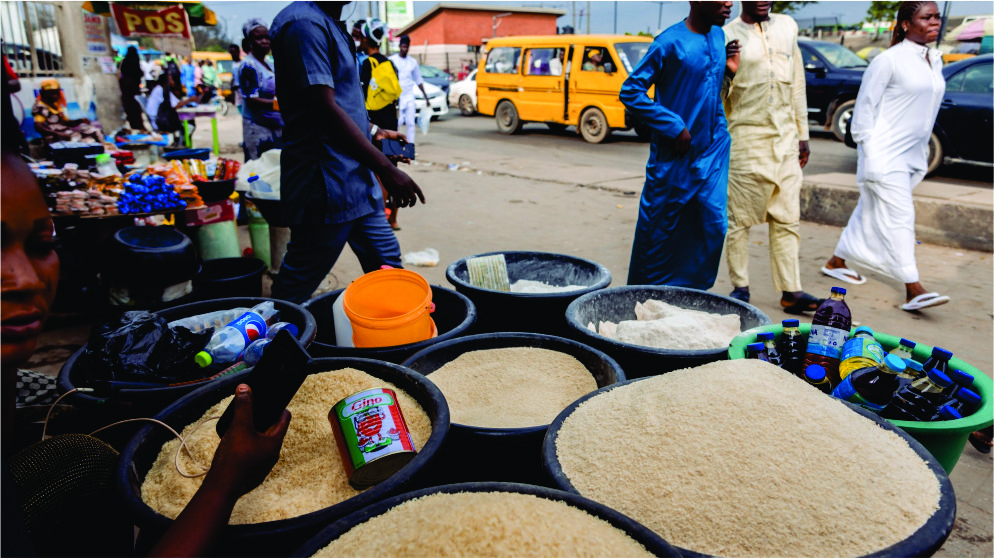
According to the report, the food inflation rate in May rose to 40.66 per cent, which was 15.84 percentage points higher compared to the rate recorded in May 2023 (24.82 per cent).
In recent years, food prices have risen across Nigeria as farmers abandon their farms due to insecurity in many farming states such as Benue, Plateau and Kaduna. The situation deteriorated last year after the Bola Tinubu administration removed subsidies on petrol, which many Nigerians use to power their vehicles and electricity generators. The government also floated the naira in an effort to unify the official exchange rate to the dollar with what is obtained in the black market.
Nigeria’s naira has, however, plunged to record lows across both the official and unofficial markets amidst an increased forex demand and a surge in the prices of goods and services across the country.
This prompted the Nigerian government to implement measures and reforms to safeguard the country’s foreign exchange market and combat speculative activities.
Details
In its inflation report Saturday, the NBS said the contributions of items on the divisional year-on-year level to the increase in the headline index are “food & non-alcoholic beverages (17.59 per cent), housing, water, electricity, gas & other fuel (5.68 per cent), clothing & footwear (2.60 per cent), and transport (2.21 per cent).”