Day: September 4, 2025

  • FG inaugurates national MSME clinic in Ogun

    FG inaugurates national MSME clinic in Ogun

    Gives entrepreneurs N150,000 grant

    Federal Government has inaugurated an Empowerment National Micro, Small and Medium Scale Enterprises (MSME) Clinic in Ogun State to provide financial support to businesses for sustained growth and prosperity, as well as fostering a robust environment for MSMEs to flourish.

    Gives entrepreneurs N150,000 grant

    Federal Government has inaugurated an Empowerment National Micro, Small and Medium Scale Enterprises (MSME) Clinic in Ogun State to provide financial support to businesses for sustained growth and prosperity, as well as fostering a robust environment for MSMEs to flourish.

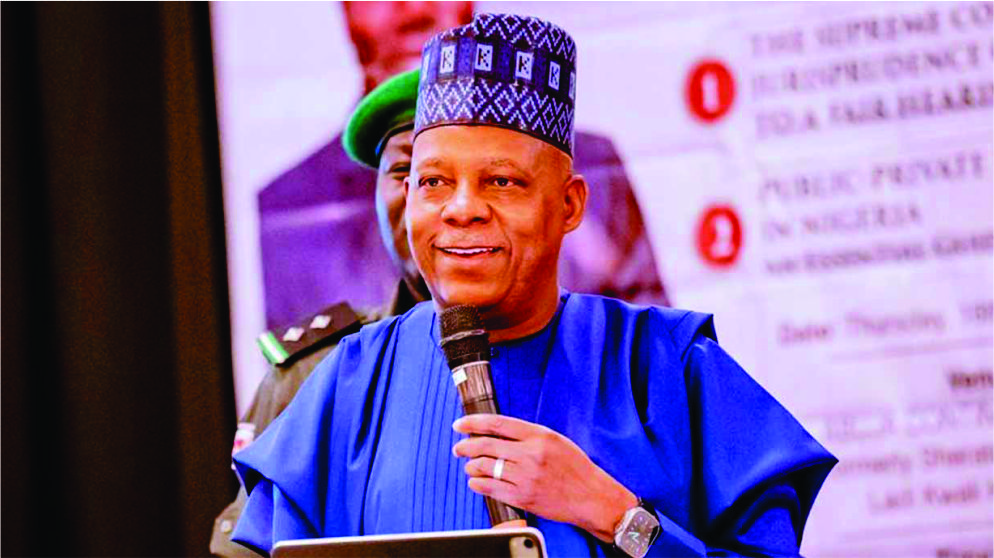
     Speaking at the commissioning of the Ogun MSME Fashion Hall and Empowerment National MSME Clinic, organised by the Presidency, the Vice President, Kashim Shettima, said that the Presidency was concerned about MSMEs with the overarching role of providing environment guidance that would propel them to sustained success. He said this is the second phase of the Empowerment National MSME Clinic, which is a strategic intervention to fortify the foundation of small businesses. The Vice President said that the intervention was also designed to bring the government close to the people by convening all regulatory agencies under one roof, as well as ensuring that the collective impact of these agencies on the business experience of MSMEs is effectively addressed. He said exhibitors present at the clinic stand to gain from the Federal Government’s MSME instant grant of N150,000 each, paid to over 15 private sectors. On his part, the Governor of Ogun State, Dapo Abiodun, noted that sadly, SMEs face many challenges, some of which include lack of access to cheap and long-term sources of finance, high cost of infrastructure such as power, transport, distribution, and logistics. 
  • Experts call for collaboration to tackle food insecurity

    Experts call for collaboration to tackle food insecurity

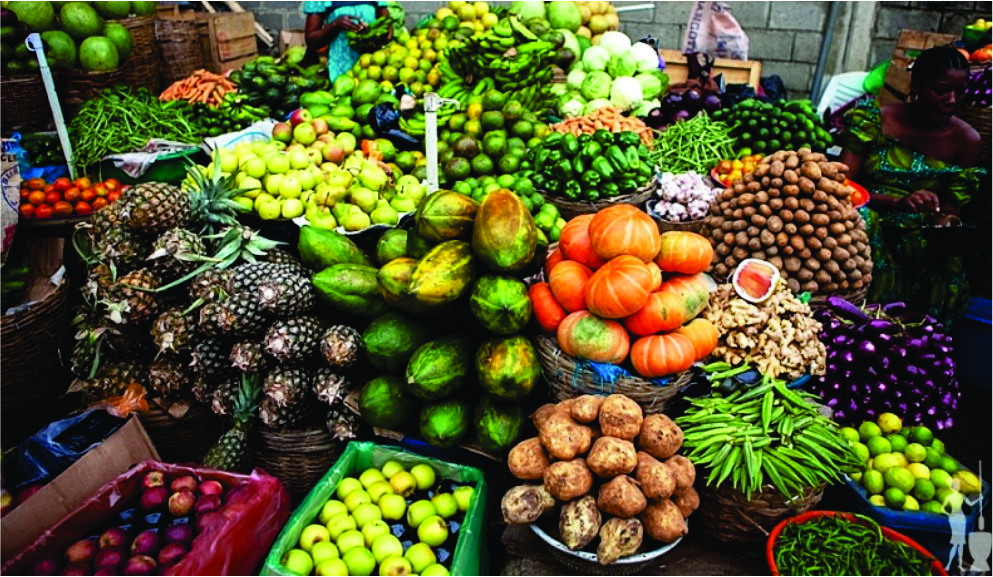
    Experts in agribusiness have called for collaboration to tackle rising food insecurity and issues limiting farmers productivity.

    The agripreneurs who made the call during the AgriConnect 2024 Summit themed: ‘Bridging the Divide: Fostering Collaboration and Innovation for a Sustainable Agriculture Future’ held recently in Lagos, said food insecurity in Nigeria can be tackled when both private and government agric stakeholders come together.

    Ruth Abisola, Lagos State Commissioner of Agriculture, said for the country to improve its food production, there has to be more collaboration between private and government organisations.

    Read also: BOI unveils palliative programme to tackle food insecurity

    “Every single agency needs to have a representative and possibly a one-stop table where everything is done and this is where we will need collaboration,” Abisola said during a panelist discussion at the summit.

    She emphasised the need for private agribusiness owners to form partnerships with the federal government, noting that the agricultural sector can achieve more with the combined efforts of both bodies.

    Abisola reiterated the efforts of the Lagos State government in tackling rising food inflation, saying that the state government was building partnerships with other stakeholders in the private sector.

    “We launched a cold shopping solution for the red meat initiative and this was in partnership with the private sector to tackle unhygienic handling of red meat in Lagos,” she added.

    However, she also said there have been hurdles to building a successful partnership with other private organisations in the country, especially from the government side.

  • Nigeria’s inflation rate rises again

    Nigeria’s inflation rate rises again

    The annual inflation rate for May also showed an 11.54 per cent increase compared to the 22.41 per cent recorded in May 2023.

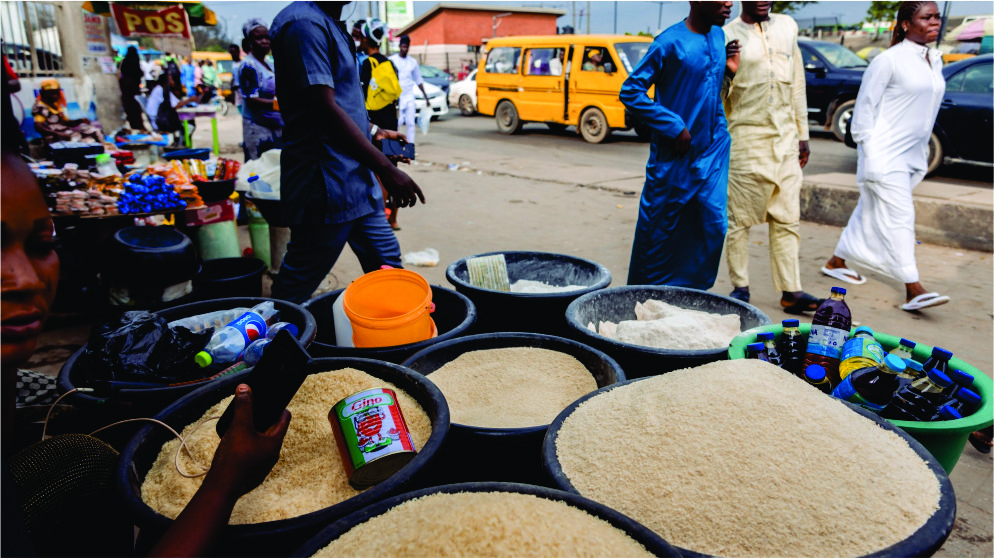
    Nigeria’s annual inflation rate increased for the fourth consecutive month to 33.95 per cent as residents of Africa’s most populous country grapple with a cost of living crisis.

    According to the National Bureau of Statistics (NBS), the May figure is 0.26 per cent higher than the 33.69 per cent recorded in April. The lowest figure in 2024 was 29.90 per cent, recorded in January.

    The annual inflation rate for May also showed an 11.54 percentage point increase compared to the 22.41 per cent recorded in May 2023. “This shows that the headline inflation rate (year-on-year basis) increased in the month of May 2024 when compared to the same month in the preceding year (i.e., May 2023),” the NBS said.

    The bureau also said that the rate of increase in the average price level in May was 2.14 per cent, 0.15 percentage points lower than the 2.29 per cent recorded in April.

    According to the report, the food inflation rate in May rose to 40.66 per cent, which was 15.84 percentage points higher compared to the rate recorded in May 2023 (24.82 per cent).

    In recent years, food prices have risen across Nigeria as farmers abandon their farms due to insecurity in many farming states such as Benue, Plateau and Kaduna. The situation deteriorated last year after the Bola Tinubu administration removed subsidies on petrol, which many Nigerians use to power their vehicles and electricity generators. The government also floated the naira in an effort to unify the official exchange rate to the dollar with what is obtained in the black market.

    Nigeria’s naira has, however, plunged to record lows across both the official and unofficial markets amidst an increased forex demand and a surge in the prices of goods and services across the country.

    This prompted the Nigerian government to implement measures and reforms to safeguard the country’s foreign exchange market and combat speculative activities.

    Details

    In its inflation report Saturday, the NBS said the contributions of items on the divisional year-on-year level to the increase in the headline index are “food & non-alcoholic beverages (17.59 per cent), housing, water, electricity, gas & other fuel (5.68 per cent), clothing & footwear (2.60 per cent), and transport (2.21 per cent).”